
Industrial content marketing delivers strong business outcomes, with 84% of B2B marketers reporting increased brand awareness. Effective technical content supports pipeline growth, demo bookings, and company acquisitions.
Manufacturing and industrial companies face distinct challenges and opportunities in content marketing. B2B strategies must address long, complex sales cycles involving multiple stakeholders who assess technical specifications. Over half of business buyers are more likely to purchase after engaging with digital content. Technical content marketing meets the needs of engineering decision-makers who require detailed, accurate information to support purchasing decisions.
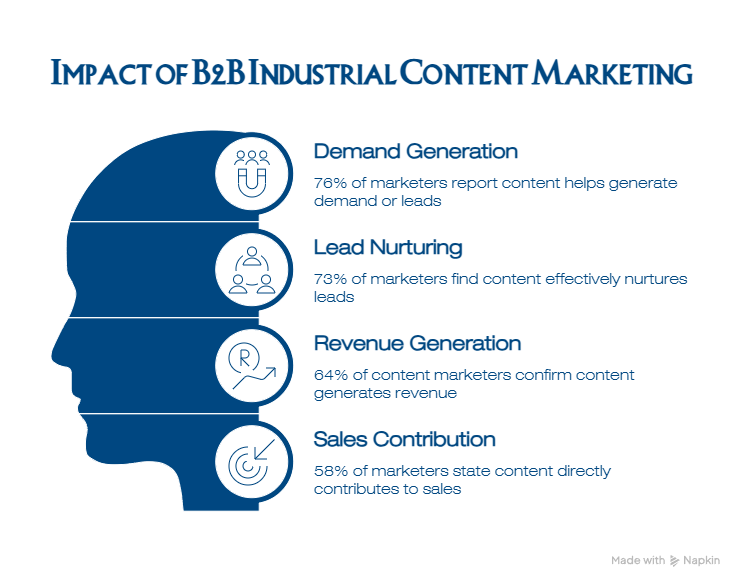
Well-executed B2B industrial content delivers measurable results. Research shows 76% of marketers credit content with demand or lead generation, and 73% say it nurtures leads. Additionally, 64% confirm it generates revenue, while 58% report direct sales contributions. These results underscore the importance of a manufacturing content strategy for informing and converting technical buyers.
 This article explores proven strategies for creating, structuring, and deploying high-value content that resonates with decision-makers in industrial markets throughout their purchasing journey.
What Makes Industrial Content Marketing Unique
Technical buyers in manufacturing require information that sets industrial content marketing apart from other approaches. Unlike consumer campaigns that use emotional appeals, industrial marketing addresses complex decisions, strict technical requirements, and specialized expertise. Content strategies must be tailored to engage and influence these buyers effectively.
Long Sales Cycles and Multi-Stakeholder Decisions
The industrial buying process involves much longer sales cycles than typical B2B or B2C transactions.
Research shows that 87% of B2B buyers experience sales cycles lasting up to six months, with industrial equipment procurement often taking 3-6 months from inquiry to purchase. Enterprise software implementations may require 6-12 months to complete.
Longer timelines result from industrial purchases involving multiple stakeholders. Since 2010, buying groups have increased from 3-4 to 6-10 decision makers, each with distinct priorities:
- Technical evaluators who assess specifications and compatibility
- Financial controllers who scrutinize ROI and long-term value
- Operations managers concerned with implementation and workflow integration
- Compliance officers who verify regulatory adherence and risk mitigation
- Executive sponsors who align purchases with strategic objectives
As a result, decision-making time has risen by 60% over the past seven years. Industrial content marketers must create materials that address these varied perspectives, providing technical detail for engineers and clear ROI calculations for financial stakeholders.
Need for Technical Accuracy and Compliance
In industrial sectors, technical accuracy is essential. Inaccurate data can cause product failures, regulatory violations, and safety hazards. This standard applies equally to marketing content.
Technical documents are critical throughout the product lifecycle, supporting regulatory compliance, verification, validation, testing, and repairs. Subject Matter Experts (SMEs) must review all industrial content before publication to ensure specifications, performance claims, and technical details meet strict accuracy standards.
In highly regulated industries, documentation requirements are strict. Content must demonstrate compliance with relevant regulations and standards, and detailed records are necessary to avoid fines, recalls, and reputational damage. Industrial content marketers must create engaging materials that are both accurate and compliant.
Differences from B2C and General B2B Content
Industrial content differs fundamentally from consumer-focused and general business content. Unlike B2C content that uses emotional appeals, industrial content marketing focuses on education, specifications, and measurable results.
General B2B content typically highlights business benefits and solutions, but industrial content must provide deeper technical detail and use industry-specific terminology. Engineers and technical professionals require comprehensive information, including specifications, application details, and evidence-based outcomes before making a purchase.
Industrial buyers prioritize value and ROI. They need content that clearly shows how products or services save money, improve efficiency, or solve operational problems. As a result, formats such as detailed case studies, technical white papers, and ROI calculators perform well in industrial contexts.
The niche nature of many industrial markets benefits content marketers. With less competition for specialized keywords and a well-defined audience, targeted industrial content can efficiently reach decision-makers seeking technical solutions.
Top Content Formats That Drive Technical Sales
Effective content formats are crucial for connecting with engineering decision-makers throughout the buying journey. Providing technical depth and practical value can shorten sales cycles and support multi-stakeholder decisions in industrial settings.
CAD-Ready Downloads and Engineering Specs
Engineers and designers increasingly use downloadable CAD models to visualize and test products before purchase. These assets are strong lead generation tools; research shows a part is purchased 77% more often when a CAD file is downloaded. Many manufacturers now offer extensive libraries of CAD-ready downloads in multiple formats (DXF, IGES, Parasolid, STEP) to support different design environments.
Industrial buyers value these resources because they eliminate the need to create product models from scratch, reducing design time and errors. CAD downloads are a strategic touchpoint in industrial content marketing, converting technical interest into sales opportunities.
White Papers and Technical Briefs
White papers establish authority by providing the comprehensive technical information engineering decision-makers need. They combine research with persuasive content to support informed client decisions. Recent studies show that 71% of B2B buyers consider white papers valuable in their purchasing decisions.

For industrial marketers, white papers typically fall into three main categories:
- Problem-solution papers that generate fresh leads
- Numbered lists that engage prospects mid-journey
- Product backgrounders that support evaluation phases
- Credibility pieces that establish expertise and neutrality
Beyond lead generation, well-crafted white papers contribute to a company’s reputation for technical expertise. Nevertheless, these documents must maintain a delicate balance—establishing credibility through detailed analysis while avoiding overtly promotional language that could undermine trust.
Case Studies with Measurable Outcomes
Case studies transform abstract product claims into concrete evidence by showcasing real-world applications and quantifiable results. As documented by research, over 70% of B2B buyers leverage case studies when making purchase decisions. These narratives demonstrate how specific challenges were overcome, making them particularly effective during later stages of technical sales cycles.
Effective industrial case studies highlight notable customers, significant problems solved, solutions implemented, and measurable results, ideally supported by statistics. The most compelling examples include outcomes such as efficiency improvements, cost reductions, or production increases that appeal to technical buyers focused on ROI.
ROI Calculators and Interactive Tools
Interactive calculators give technical buyers personalized insights into potential return on investment. These tools let prospects enter their own parameters and receive customized projections without attending sales presentations. ROI calculators are especially valuable in industrial contexts involving significant capital expenditures.
Companies such as Ericsson use tools like the Smart Manufacturing Value Calculator to project ROI for private 5G cellular technology in manufacturing. Automation companies also offer calculators that compare robotic system costs to manual labor over time. These interactive tools help prospects move from theoretical interest to practical consideration by quantifying potential benefits in their specific context.
Demo Videos for Complex Machinery
Visual demonstrations improve understanding of complex industrial equipment. Demo videos show machinery in operation, highlighting features and benefits that are difficult to convey through text. They allow buyers to see products in action without site visits or live demonstrations.
The most effective industrial demo videos focus on specific features and operations rather than covering everything at once. They simplify complex processes, address common customer questions, and establish brand authority through demonstrated expertise.
Application Notes and Troubleshooting Guides
Application notes and troubleshooting guides offer practical, solution-oriented content for specific technical challenges. These documents explain how products can be used in different contexts, helping buyers envision implementation in their operations. Interactive troubleshooting guides are especially valuable, guiding operators and technicians through logical, symptom-based steps to diagnose problems.
These resources serve several purposes in the industrial sales process. They demonstrate in-depth product knowledge, help current customers maximize value, and reveal new application opportunities that may not be immediately apparent to potential buyers.
Building a B2B Content Strategy for Industrial Companies
Effective industrial content marketing requires cross-functional coordination and systematic planning. Without alignment between departments, audience insight, and strategic scheduling, even strong technical content will not succeed.
Aligning Content with Sales and Product Teams
A disconnect between sales goals and strategic priorities is a common challenge for industrial companies. Aligning content marketing with sales creates a unified approach that improves results. Companies with strong sales and marketing alignment are 67% more effective at closing deals and 58% better at retaining customers.
To achieve alignment, develop a strategic sales plan that defines target customers and outlines effective processes to reach them. Hold regular joint planning sessions with marketing, sales, and product teams to ensure everyone works toward shared objectives.

Sales representatives provide invaluable insights from Sales representatives offer valuable insights from direct customer interactions, understanding needs, preferences, and pain points. Their feedback refines marketing strategies, messaging, and campaigns.
Clearly defining departmental roles and responsibilities ensures cohesive progress toward shared objectives.sales does that” mentality, successful industrial companies implement cross-functional feedback loops to optimize marketing campaigns and sales enablement. These feedback mechanisms ensure both teams engage B2B buyers with an accurate understanding of their motivations and business concerns.
Want to improve your technical content strategy? Speak with a content strategist who understands technical buying cycles—book your consultation today. https://www.dreamfactoryagency.com/
Creating a Content Calendar for Product Launches
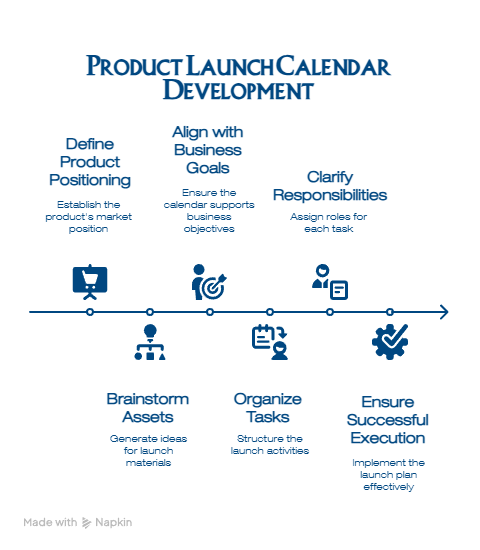
A product launch calendar organizes tasks, clarifies responsibilities, and supports successful industrial product launches. As the foundation of your content strategy, it should align with your business goals.
Once you define your product’s positioning and messaging, identify the assets needed for each stage of the launch. For industrial products, consider:
 Blog posts and landing pages
- Press releases and technical briefs
- Product demonstration videos
- Customer testimonials and case studies
- Email newsletters and PPC campaigns
Break down each asset into specific tasks, detailing required steps, time estimates, responsibilities, and dependencies. This approach enables realistic scheduling and resource allocation.
Research suggests Tuesday is often the best day to launch new products. However, consider your audience’s habits and industry patterns when selecting launch dates.
Regularly review and update the calendar during the launch process to accommodate changes. Prioritize tasks in weekly or biweekly meetings where team members share progress and adjust plans as needed.
Using Buyer Personas to Guide Messaging
Industrial buyers expect personalized experiences that address their needs. Research shows 76% of shoppers feel frustrated without personalization. Realistic buyer personas help shape content strategies that drive traffic and increase conversions.
A buyer persona profiles your ideal customer using market research and existing data. For manufacturing companies, effective personas include:
- General information (age, job title, responsibilities)
- Buying behavior patterns
- Daily challenges and responsibilities
- Technical needs and goals
- Common objections and preferences
When developing industrial buyer personas, account for the multi-stakeholder nature of technical purchases. Include technical evaluators, financial controllers, operations managers, and executive sponsors, each with distinct priorities and concerns.
Effective messaging strategies for Effective messaging for industrial B2B companies address specific pain points and demonstrate tangible results. Use concrete examples and data to show how you solve technical problems. This specificity builds trust and differentiates you in the market. to define the client’s problem in their language and back your solution with real-world outcomes. Case studies, metrics, and proof points do more than describe what you do—they validate it for engineering decision-makers seeking reliable solutions.
SEO and Keyword Strategy for Technical Content
Effective industrial content marketing relies on SEO strategies that reflect how technical buyers search for solutions. With an average ROI of 22:1, SEO is essential for B2B technical marketing.
Targeting Long-Tail, High-Intent Keywords
Long-tail keywords account for 70% of web searches, providing manufacturers with strong opportunities to attract qualified leads. These specific phrases signal higher purchase intent and face less competition, delivering 2.5 times higher conversion rates than short-tail keywords.
For industrial marketers, high-intent search terms indicate buyer readiness.
 For industrial marketers, these high-intent search terms signal buyer readiness. When technical decision-makers search for specific solutions, they typically use:
- Product/service keywords with transactional elements (“wealth management services”) – 95/100 commercial value score
- Problem/solution phrases (“how to keep projects on track”) – 87/100 commercial value
- Cost/value queries (“is PPC worth it”) – 84/100 commercial value
- Purchase-related questions (“where to buy heavy equipment”) – 80/100 commercial value
Engineers and procurement teams often use industry-specific terminology in their searches. Thorough research to identify these specialized phrases is essential for attracting qualified traffic.
Optimizing for ‘B2B Industrial Content’ and ‘Technical Content Marketing’
Effective B2B content strategies prioritize bottom-funnel keywords that signal purcEffective B2B content strategies focus on bottom-funnel keywords that indicate purchase intent rather than generic high-volume terms. Target phrases such as “[Tool] vs [Competitor],” “Best [category] platform for [job to be done],” and searches including “pricing,” “features,” “reviews,” or “alternatives.”r industrial companies. This approach organizes content around three or four broad keywords (hubs) with related long-tail variants (spokes). Each content piece should target a specific buyer persona while maintaining technical accuracy.
Primary keywords should be included in homepage positioning statements and H1 tags. However, quality is paramount. Overusing keywords at the expense of readability can deter visitors, even if rankings improve initially. As algorithms advance, search engines and AI tools increasingly prioritize well-structured, user-focused content.
Structuring Content for Featured Snippets and AI Tools
Featured snippets appear in about 4.77% of search queries and capture 8% of clicks, providing industrial marketers with valuable visibility opportunities. Well-structured technical content is well positioned to secure these spots.
To optimize for featured snippets, provide concise answers of 40 to 50 words to common industry questions. Use clear, question-based headings followed by direct answers that include the keyword. Incorporate tables, bulleted lists, and numbered steps to further increase your chances.
AI search tools now extract information directly from web content. Technical documents using structured data markup, such as FAQPage, HowTo, and QAPage schema, are especially effective for generating featured snippets. Proper use of headings helps search engines and AI understand content structure and importance.
Strategic keyword targeting and content structuring help industrial marketers increase visibility in both traditional search results and emerging AI platforms.
Content Distribution Channels That Work in Industrial B2B
Effective distribution of technical content is crucial for reaching stakeholders at every stage of the industrial buying process. Selecting the right channels ensures engineering specifications and solutions reach decision-makers when they are most receptive
LinkedIn Thought Leadership and Carousel Posts
LinkedIn is a leading platform for industrial content distribution, with over 1 billion professionals and 65 million decision-makers. It gives manufacturers direct access to technical buyers through targeted content. Thought leadership is especially effective here, with three in five B2B leaders planning to use it in their strategies.
Carousel posts are highly effective for technical content, generating 3 to 6 times more engagement than single-image posts. These multi-slide formats break down complex concepts into digestible segments. For best results, aim for about 12 slides with 25 to 50 words each. This format is ideal for presenting:
- Product specifications and comparisons
- Step-by-step technical processes
- Case study results with visual data
- Equipment capabilities across applications
Email Campaigns by Buyer Role and Industry
Equally important, email marketing remains one of the top-performing strategies in industrial marketing. Segmented campaigns have shown a 760% increase in revenue, according to Campaign Monitor. Segmenting by job function is especially effective, allowing tailored content for engineers, operations managers, and financial decision-makers.ts email performance in industrial contexts. Simply including a recipient’s name in the subject line can increase open rates by 26%. Additionally, clear calls-to-action directing readers to technical resources drive engagement throughout long industrial sales cycles
Trade Shows, Webinars, and Partner Channels
In-person events remain powerful distribution channels for industrial companies. Trade shows offer unique opportunities for technical marketers to connect with industry representatives and demonstrate complex equipment. These events often attract senior and C-level staff, making them ideal for distributing premium technical content.
Channel partners also play a vital role in industrial content distribution. Manufacturers expanding into new markets often use distributors to reach customers. Evaluating partnerships by revenue, market share, and service capabilities helps maximize distribution effectiveness.
Successful industrial content distribution requires a balanced approach across digital and traditional channels, with content tailored to each platform’s strengths and audience expectations.
Tracking Content ROI in Industrial Marketing
Measuring return on investment is a significant challenge for industrial marketers, with 21% citing ROI tracking as their biggest hurdle in content development. While the concept is straightforward, complex B2B purchasing journeys make accurate calculation difficult for manufacturers.
Attribution Models for Long Sales Cycles
Industrial sales cycles often last more than seven months, making it challenging to link early marketing touchpoints to final conversions. Attribution models address this by assigning value to each interaction along the customer journey.
Full-path attribution models are effective for industrial companies, providing a detailed view of the customer journey by giving proportional credit to each interaction. This approach ensures all touchpoints, from social media to product demonstrations, are recognized.<
Linear attribution assigns equal credit to all touchpoints. For example, if a customer journey has five interactions, each receives 20% credit. While less nuanced than full-path models, it offers a straightforward evaluation method for complex sales processes.
Using CRM and Marketing Automation Tools
Integrated CRM systems turn attribution insights into actionable strategies. These platforms combine data from sources such as email engagement, webinar attendance, and specification downloads to create a unified view and enable consistent messaging across channels.
Marketing automation tools and tracking systems identify which channels drive conversions. Use unique tracking URLs for each medium and enable conversion tracking in analytics platforms. Platform-specific promo codes can further clarify attribution in reports.
HubSpot’s Attribution Reporting Tool offers multiple models including first-touch, last-touch, linear, time decay, and position-based attribution. This flexibility helps industrial marketers understand which marketing efforts contribute most to pipeline development.
Repurposing High-Performing Assets Across Channels
Before creating new content, audit your existing assets. This process often uncovers high-performing pieces suitable for new platforms, evergreen content needing minor updates, or ordinary content that could be improved with a fresh perspective.
Tracking metrics like social shares, comments, and community participation helps identify Track metrics such as social shares, comments, and community participation to identify content worth repurposing. Also, analyze which technical documents sales teams use to close deals, as these proven assets merit broader distribution., and boosts online presence.
For industrial marketers with tight budgets and high stakes, this approach maximizes existing investments while maintaining technical accuracy and compliance.
Conclusion: Transforming Technical Expertise into Business Growth
Industrial content marketing is a powerful driver of technical sales when executed with precision and strategy. As discussed, specialized content directly influences complex B2B purchasing decisions. Notably, 76% of marketers report that content helps generate leads, and 64% confirm it drives revenue.
Industrial marketing requires distinct approaches. Technical accuracy is essential, stakeholder diversity calls for multifaceted messaging, and long sales cycles require consistent nurturing. These challenges also present opportunities for companies investing in high-quality technical content.
Successful industrial marketers create assets that engineering decision-makers value. CAD-ready downloads convert interest into opportunities, with a 77% purchase rate after file downloads. White papers establish authority, case studies provide measurable proof of effectiveness, and ROI calculators turn abstract benefits into personalized projections for cost-conscious buyers.
An effective strategy aligns content creation, product development, and sales activities. This coordination ensures consistent messaging across all customer touchpoints and addresses the needs of diverse stakeholders. Structured content calendars and detailed buyer personas provide the framework for systematic execution.
Evidence shows industrial companies should prioritize search optimization with targeted technical keywords and proper content structure. Long-tail, high-intent search terms deliver 2.5 times higher conversion rates than generic alternatives, making them essential for manufacturing content strategies.
The distribution landscape for industrial content is evolving, but LinkedIn remains valuable for reaching technical decision-makers. Segmented email campaigns also drive engagement, with personalization increasing open rates by 26%. Traditional channels, like trade shows, remain important, especially for complex equipment demonstrations and premium content.
Measuring content ROI is challenging for industrial marketers. However, attribution models tailored for long sales cycles help link early touchpoints to conversions. CRM integration and strategic content repurposing further maximize long-term returns.
The path forward for manufacturing companies is clear: those who develop systematic approaches to technical content creation will gain a competitive advantage in digital industrial markets. Consistently delivering valuable information that addresses engineering challenges builds trust, demonstrates expertise, and accelerates complex B2B sales cycles.
FAQs
Q1. What makes industrial content marketing different from other types of marketing?
Industrial content marketing focuses on technical accuracy, addresses complex decision-making processes involving multiple stakeholders, and caters to longer sales cycles. It requires in-depth technical knowledge and often involves creating content like CAD downloads, white papers, and ROI calculators that are specifically valuable to engineering decision-makers.
Q2. How can industrial companies measure the ROI of their content marketing efforts?
Industrial companies can measure content marketing ROI by using attribution models adapted for long sales cycles, integrating CRM and marketing automation tools, and tracking metrics like lead generation, revenue contribution, and engagement rates. Full-path attribution models are particularly useful for understanding the entire customer journey in complex B2B sales processes.
Q3. What are some effective content formats for industrial marketing?
Effective content formats for industrial marketing include CAD-ready downloads, white papers, technical briefs, case studies with measurable outcomes, ROI calculators, demo videos for complex machinery, and application notes. These formats provide the technical depth and practical value that engineering decision-makers require during their buying journey.
Q4. How important is SEO for industrial content marketing?
SEO is crucial for industrial content marketing, with an average ROI of 22:1. Targeting long-tail, high-intent keywords specific to industrial sectors can lead to 2.5 times higher conversion rates. Proper content structuring for featured snippets and AI tools is also important for improving visibility in search results.
Q5. What distribution channels work best for industrial B2B content?
Effective distribution channels for industrial B2B content include LinkedIn for thought leadership and carousel posts, segmented email campaigns tailored to specific buyer roles and industries, trade shows for in-person demonstrations, webinars for detailed technical presentations, and partner channels for expanded reach. A balanced approach across digital and traditional channels is key to success.