
Industrial content marketing can drive remarkable business results, with 84% of B2B marketers reporting it helps create brand awareness. Effective technical content goes beyond simple promotion, directly contributing to pipeline growth, demo bookings, and even company acquisitions.
For manufacturing and industrial companies, content marketing presents unique challenges and opportunities. B2B content marketing strategies must account for lengthy, complex sales cycles where multiple stakeholders evaluate technical specifications before making decisions. Furthermore, over half of business buyers are more likely to purchase from companies after reading their digital content. Technical content marketing specifically addresses the needs of engineering minded decision-makers who require detailed, accurate information to support their purchasing processes.
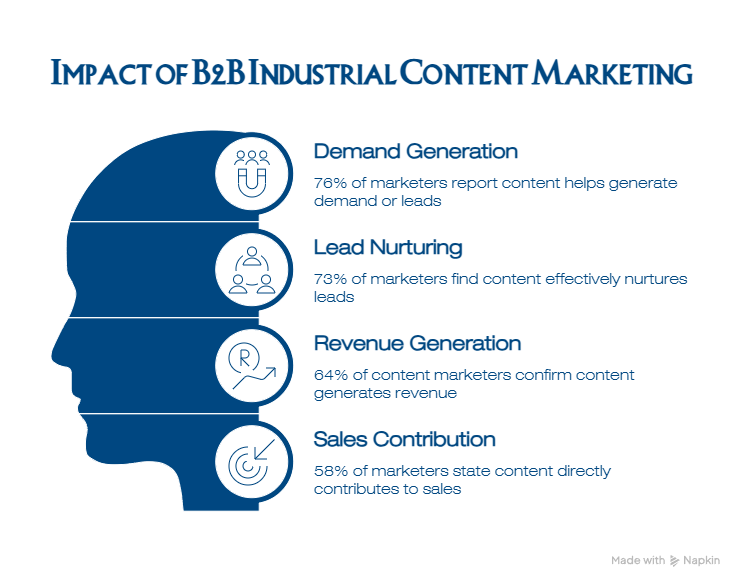
The impact of well-executed B2B industrial content is measurable and significant. According to research, 76% of marketers say content helped with demand or lead generation, while 73% report it effectively nurtures leads. Additionally, 64% of content marketers confirm it generates revenue, with 58% stating it directly contributed to sales. These statistics highlight why manufacturing content strategy has become essential for companies seeking to inform and convert technical buyers.
 This article explores proven strategies for creating, structuring, and deploying high-value content that resonates with decision-makers in industrial markets throughout their purchasing journey.
What Makes Industrial Content Marketing Unique
Technical buyers in manufacturing sectors have distinct information needs that set industrial content marketing apart from other business marketing approaches. Unlike consumer-focused campaigns that thrive on emotional appeals, industrial marketing must cater to complex decision-making processes, strict technical requirements, and specialized knowledge bases and qualifications. These unique characteristics demand tailored content strategies to effectively reach and influence buyers.
Long Sales Cycles and Multi-Stakeholder Decisions
The industrial buying process involves notably longer sales cycles than typical B2B or B2C transactions.
Research shows that 87% of B2B buyers report a typical sales cycle can last up to six months, with some industrial equipment procurement processes extending 3-6 months from initial inquiry to final purchase. Enterprise software implementations can take even longer, ranging from 6-12 months to close.
This extended timeline exists because industrial purchasing decisions rarely rest with a single individual. Since 2010, the average buying group has grown significantly from 3-4 decision makers to 6-10 stakeholders. Each participant brings different priorities to the table:
- Technical evaluators who assess specifications and compatibility
- Financial controllers who scrutinize ROI and long-term value
- Operations managers concerned with implementation and workflow integration
- Compliance officers who verify regulatory adherence and risk mitigation
- Executive sponsors who align purchases with strategic objectives
Consequently, decision-making time has increased by 60% compared to seven years ago. Industrial content marketers must create materials that address these varied perspectives simultaneously, providing technical depth for engineers while offering clear ROI calculations for financial stakeholders.
Need for Technical Accuracy and Compliance
In industrial sectors, technical accuracy isn’t merely preferred—it’s essential. Inaccurate data in manufacturing contexts can lead to serious consequences including product failures, regulatory violations, and even safety hazards. This reality extends to marketing content as well.
Technical documents serve as critical components throughout the product lifecycle, playing vital roles in regulatory compliance, product verification, validation, testing, and repairs. For this reason, Subject Matter Experts (SMEs) must review all industrial content before publication, ensuring that specifications, performance claims, and technical details meet rigorous accuracy standards.
Moreover, in highly regulated industries, documentation requirements are stringent. Content must demonstrate compliance with applicable regulations and standards, with detailed, reliable records necessary to avoid potential fines, recalls, and reputational damage. Industrial content marketers thus face the dual challenge of creating engaging materials that remain scrupulously accurate and compliant with industry regulations.
Differences from B2C and General B2B Content
Industrial content differs fundamentally from both consumer-focused and general business content in several key ways. In contrast to B2C content that often leverages emotional appeals, industrial content marketing centers on education, specifications, and demonstrable results.
General B2B content typically focuses on business benefits and solutions, but industrial content must go further—diving deep into technical details and utilizing industry-specific terminology that would overwhelm typical business readers. Engineers and technical professionals seek comprehensive information including specifications, application details, and evidence-based outcomes before considering a purchase.
Industrial buyers prioritize value and ROI above all else. They require content that explicitly demonstrates how products or services will save money, improve efficiency, or solve specific operational problems. This explains why certain content formats perform particularly well in industrial contexts—detailed case studies with measurable outcomes, white papers addressing technical challenges, and ROI calculators that quantify potential benefits.
The niche nature of many industrial markets actually represents an advantage for content marketers. With less competition for specialized keywords and a highly defined audience, well-crafted industrial content can efficiently reach decision-makers seeking solutions to specific technical challenges.
Top Content Formats That Drive Technical Sales
Effective content formats play a decisive role in connecting with engineering decision-makers throughout their buying journey. By providing technical depth and practical value, specialized content assets can significantly shorten sales cycles and facilitate multi-stakeholder decisions in industrial settings.
CAD-Ready Downloads and Engineering Specs
Engineers and designers increasingly rely on downloadable CAD models to visualize and test products before purchase. These technical assets serve as powerful lead generation tools, with research indicating that a part is ultimately purchased 77% more often when a CAD file is downloaded. Many manufacturers now offer comprehensive libraries of CAD-ready downloads in multiple formats (DXF, IGES, Parasolid, STEP) to accommodate various design environments.
Industrial buyers value these resources because they eliminate the need to create product models from scratch, subsequently reducing design time and potential errors. CAD downloads represent a strategic touchpoint in the industrial content marketing process, converting technical interest into tangible sales opportunities.
White Papers and Technical Briefs
White papers establish authority while delivering comprehensive technical information that engineering decision-makers require. These documents combine research with persuasive content to help potential clients make informed decisions. Indeed, according to recent studies, 71% of B2B buyers find white papers valuable in their purchasing decisions.
 For industrial marketers, white papers generally fall into three effective categories:
- Problem-solution papers that generate fresh leads
- Numbered lists that engage prospects mid-journey
- Product backgrounders that support evaluation phases
- Credibility pieces that establish expertise and neutrality
Beyond lead generation, well-crafted white papers contribute to a company’s reputation for technical expertise. Nevertheless, these documents must maintain a delicate balance—establishing credibility through detailed analysis while avoiding overtly promotional language that could undermine trust.
Case Studies with Measurable Outcomes
Case studies transform abstract product claims into concrete evidence by showcasing real-world applications and quantifiable results. As documented by research, over 70% of B2B buyers leverage case studies when making purchase decisions. These narratives demonstrate how specific challenges were overcome, making them particularly effective during later stages of technical sales cycles.
Effective industrial case studies highlight impressive customers, significant problems solved, remarkable solutions implemented, and demonstrable results—ideally with supporting statistics. The most compelling examples include measurable outcomes like efficiency improvements, cost reductions, or production increases that resonate with technical buyers focused on ROI.
ROI Calculators and Interactive Tools
Interactive calculators provide technical buyers with personalized insights regarding potential return on investment. These tools allow prospects to input their specific parameters and receive customized projections without sitting through sales presentations. ROI calculators particularly shine in industrial contexts where purchases involve significant capital expenditure.
Companies like Ericsson demonstrate this approach with their Smart Manufacturing Value Calculator, which projects ROI for private 5G cellular technology implementations in manufacturing settings. Similarly, automation companies offer tools that compare robotic system costs against manual labor operations over extended time periods. These interactive assets move prospects from theoretical interest to practical consideration by quantifying potential benefits in their specific context.
Demo Videos for Complex Machinery
Visual demonstrations significantly enhance understanding of complex industrial equipment. Demo videos showcase machinery in operation, highlighting key features and benefits that might be difficult to convey through text alone. They allow potential buyers to visualize products in action without requiring site visits or live demonstrations.
The most effective industrial demo videos focus on specific features and operations rather than attempting to cover everything in a single video. They enhance comprehension by simplifying complex operations through visual demonstration, directly addressing common customer questions, and establishing brand authority through demonstrated expertise.
Application Notes and Troubleshooting Guides
Application notes and troubleshooting guides provide practical, solution-oriented content for specific technical challenges. These documents explain how products can be applied in various contexts, helping buyers envision implementation in their own operations. Interactive troubleshooting guides are particularly valuable, as they lead equipment operators and maintenance technicians through logical, symptom-based paths to diagnose problems.
These resources serve multiple purposes in the industrial sales process—they demonstrate in-depth product knowledge, help current customers maximize value, and identify new application opportunities that might not be immediately obvious to potential buyers.
Building a B2B Content Strategy for Industrial Companies
Creating effective strategies in industrial content marketing requires cross-functional coordination and systematic planning. Even the best technical content fails without proper alignment between departments, audience understanding, and strategic scheduling.
Aligning Content with Sales and Product Teams
The disconnect between sales goals and broader strategic priorities remains a common challenge for industrial companies. Effective alignment between content marketing efforts and sales teams creates a unified approach that directly impacts results. Businesses with strong sales and marketing alignment are 67% more effective at closing deals and 58% better at retaining customers.
To achieve this alignment, first develop a strategic sales plan optimized for business goals. This plan should clearly define target customers and establish processes to reach them effectively. Regular joint planning sessions between marketing, sales, and product teams ensure everyone works toward shared objectives.
 Sales representatives provide invaluable insights from their direct customer interactions. They understand customer needs, preferences, and pain points firsthand. This feedback helps refine marketing strategies, improve messaging, and develop more effective campaigns. Therefore, establishing clear roles and responsibilities for each department ensures cohesive work toward shared objectives.
Instead of operating under a “marketing does this and sales does that” mentality, successful industrial companies implement cross-functional feedback loops to optimize marketing campaigns and sales enablement. These feedback mechanisms ensure both teams engage B2B buyers with an accurate understanding of their motivations and business concerns.
Want to improve your technical content strategy? Speak with a content strategist who understands technical buying cycles—book your consultation today. https://www.dreamfactoryagency.com/
Creating a Content Calendar for Product Launches
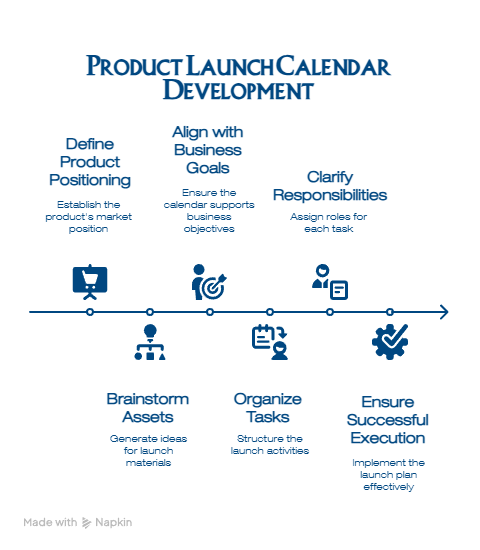
A product launch calendar organizes tasks, clarifies responsibilities, and ensures successful execution of your industrial product launch. As the foundation of your manufacturing content strategy, this calendar must align with your overall business goals.
After defining your product’s positioning and messaging, brainstorm different assets needed throughout the launch cycle. For industrial products, consider:
 Blog posts and landing pages
- Press releases and technical briefs
- Product demonstration videos
- Customer testimonials and case studies
- Email newsletters and PPC campaigns
Next, break down each asset into individual tasks, specifying steps required, time estimates, team member responsibilities, and dependencies. This detailed breakdown allows for realistic scheduling and resource allocation.
When planning launch timing, research indicates Tuesday is often the optimal day to launch new products. Nonetheless, industrial companies should consider their specific audience’s habits and industry patterns when finalizing dates.
Throughout the launch process, regularly review and update the calendar to accommodate changes. Prioritization should occur in weekly or biweekly project meetings where team members share progress and make necessary adjustments.
Using Buyer Personas to Guide Messaging
Industrial buyers expect personalized experiences that address their specific needs. Research shows 76% of shoppers feel frustrated when they don’t find personalized customer experiences. Creating realistic buyer personas helps shape content marketing strategies that drive website traffic and boost conversions.
A buyer persona is a profile identifying your hypothetical ideal customer based on market research and existing customer data. For manufacturing companies, effective personas include:
- General information (age, job title, responsibilities)
- Buying behavior patterns
- Daily challenges and responsibilities
- Technical needs and goals
- Common objections and preferences
When developing industrial buyer personas, remember to account for the multi-stakeholder nature of technical purchasing decisions. Include representations of technical evaluators, financial controllers, operations managers, and executive sponsors—each with different priorities and concerns.
Effective messaging strategies for industrial B2B companies focus on solving specific pain points within your niche while demonstrating tangible results. Instead of broad claims about efficiency or innovation, provide concrete examples with data showing how you uniquely address technical problems. This specificity builds trust and establishes clear differentiation in crowded markets.
The clearest way to stand out is to define the client’s problem in their language and back your solution with real-world outcomes. Case studies, metrics, and proof points do more than describe what you do—they validate it for engineering decision-makers seeking reliable solutions.
SEO and Keyword Strategy for Technical Content
Successful industrial content marketing requires strategic search engine optimization (SEO) that aligns with how technical buyers actually search for solutions. Data shows the average ROI of SEO is 22:1, making it an essential component of any B2B technical marketing strategy.
Targeting Long-Tail, High-Intent Keywords
Long-tail keywords comprise 70% of all web searches, offering manufacturing companies a valuable opportunity to attract qualified leads. Unlike broad terms, these specific phrases indicate clearer purchase intent and face less competition. Research demonstrates that long-tail keywords deliver 2.5 times higher conversion rates than short-tail alternatives.
 For industrial marketers, these high-intent search terms signal buyer readiness. When technical decision-makers search for specific solutions, they typically use:
- Product/service keywords with transactional elements (“wealth management services”) – 95/100 commercial value score
- Problem/solution phrases (“how to keep projects on track”) – 87/100 commercial value
- Cost/value queries (“is PPC worth it”) – 84/100 commercial value
- Purchase-related questions (“where to buy heavy equipment”) – 80/100 commercial value
Engineers and procurement teams routinely search using industry-specific terminology. Hence, conducting thorough research to identify these specialized phrases pays significant dividends in attracting qualified traffic.
Optimizing for ‘B2B Industrial Content’ and ‘Technical Content Marketing’
Effective B2B content strategies prioritize bottom-funnel keywords that signal purchase intent over generic high-volume terms. Consider targeting phrases like “[Tool] vs [Competitor],” “Best [category] platform for [job to be done],” and searches including “pricing,” “features,” “reviews,” or “alternatives”.
Additionally, implementing a Hub & Spoke content model proves highly effective for industrial companies. This approach organizes content around three or four broad keywords (hubs) with related long-tail variants (spokes). Each content piece should target a specific buyer persona while maintaining technical accuracy.
Primary keywords should appear prominently in homepage positioning statements and H1 tags. Yet quality remains paramount – overly keyword-focused content that sacrifices readability will drive away visitors despite potentially ranking well initially. As algorithms evolve, both search engines and AI tools increasingly prioritize well-structured, user-focused content.
Structuring Content for Featured Snippets and AI Tools
Featured snippets appear in approximately 4.77% of all search queries and capture about 8% of clicks, offering industrial marketers a valuable opportunity to gain visibility. Technical content structured appropriately has excellent potential to claim these positions.
To optimize for featured snippets, create concise answers (40-50 words) to common industry questions. Structure your technical content with clear question-based heading tags immediately followed by direct answers containing the keyword. Tables, bulleted lists, and numbered steps also increase featured snippet opportunities.
AI search tools increasingly extract information directly from web content. Technical documents with structured data markup (especially FAQPage, HowTo, and QAPage schema types) are particularly effective for generating featured snippets. Proper implementation of headings helps both search engines and AI understand content structure and significance.
Through strategic keyword targeting and content structuring, industrial marketers can improve visibility across both traditional search results and emerging AI platforms.
Content Distribution Channels That Work in Industrial B2B
Distributing technical content effectively remains crucial for reaching the right stakeholders at each stage of complex industrial buying journeys. Strategic channel selection ensures engineering specifications and technical solutions reach decision-makers when they’re most receptive.
LinkedIn Thought Leadership and Carousel Posts
First and foremost, LinkedIn provides an unmatched platform for industrial content distribution, hosting over 1 billion professionals including 65 million decision-makers. As such, it offers manufacturing companies direct access to technical buyers through targeted content. Thought leadership particularly resonates on this platform, with three in five B2B leaders planning to employ it in their marketing strategies.
Carousel posts represent a standout format for technical content, generating 3-6 times higher engagement than single-image posts. These multi-slide documents effectively communicate complex industrial concepts by breaking them into digestible segments. For optimal performance, industrial marketers should aim for approximately 12 slides with 25-50 words per slide. This format excels at presenting:
- Product specifications and comparisons
- Step-by-step technical processes
- Case study results with visual data
- Equipment capabilities across applications
Email Campaigns by Buyer Role and Industry
Equally important, email marketing continues to rank among the highest-performing industrial marketing strategies. Segmented email campaigns have demonstrated a remarkable 760% increase in revenue according to Campaign Monitor. In technical settings, segmentation by job function proves particularly valuable—delivering different content to engineers, operations managers, and financial decision-makers.
Personalization significantly impacts email performance in industrial contexts. Simply including a recipient’s name in the subject line can increase open rates by 26%. Additionally, clear calls-to-action directing readers to technical resources drive engagement throughout long industrial sales cycles.
Trade Shows, Webinars, and Partner Channels
Undoubtedly, in-person events remain powerful content distribution channels for industrial companies. Trade shows provide unparalleled opportunities for technical marketers to connect with industry representatives and demonstrate complex equipment firsthand. These events typically gather senior and C-level staff, making them ideal venues for distributing premium technical content.
Channel partners furthermore play a vital role in industrial content distribution. Manufacturing companies expanding to new markets typically leverage distributors to reach customers. Evaluating these partnerships based on revenue, market share, and service capabilities helps manufacturers maximize content distribution effectiveness.
Primarily, successful industrial content distribution requires a balanced approach across digital and traditional channels, with content adapted appropriately for each platform’s unique strengths and audience expectations.
Tracking Content ROI in Industrial Marketing
Measuring return on investment stands as a crucial challenge for industrial marketers, with 21% reporting that tracking ROI represents their biggest hurdle in content development. The premise seems straightforward—dividing what you get (return) by what you invest—yet complex B2B purchasing journeys make this calculation particularly challenging for manufacturing companies.
Attribution Models for Long Sales Cycles
Industrial sales cycles frequently extend beyond seven months, making it difficult to connect early marketing touchpoints with eventual conversions. Attribution models solve this puzzle by assigning value to various interactions throughout the customer journey.
Full-path attribution models work exceptionally well for industrial companies, offering a detailed understanding of the entire customer journey by giving proportional credit to each interaction. Essentially, this approach recognizes that whether a prospect discovered your brand through social media, engaged with technical documentation, or attended product demonstrations, each touchpoint deserves acknowledgment.
Linear attribution distributes credit equally across all touchpoints—for instance, if a customer journey involves five interactions, each receives 20% credit regardless of position. Although less nuanced than full-path models, this approach provides a straightforward evaluation method for complex industrial sales processes.
Using CRM and Marketing Automation Tools
Integrated CRM systems transform attribution insights into actionable strategy. These platforms combine data from various sources—email engagements, webinar attendance, specification downloads—creating a unified view that enables consistent messaging across channels.
Marketing automation tools alongside proper tracking systems reveal which channels drive meaningful conversions. Set up unique tracking URLs for each medium and enable conversion tracking in analytics platforms. Platform-exclusive promo codes provide additional attribution clarity when viewed in reports.
HubSpot’s Attribution Reporting Tool offers multiple models including first-touch, last-touch, linear, time decay, and position-based attribution. This flexibility helps industrial marketers understand which marketing efforts contribute most to pipeline development.
Ready to maximize your industrial content ROI? Speak with a content strategist who understands technical buying cycles—book your consultation today. https://www.dreamfactoryagency.com/
Repurposing High-Performing Assets Across Channels
Before creating new content, conduct a thorough audit of existing assets. This process often reveals surprising opportunities: high-performing pieces suitable for new platforms, evergreen content needing only modest updates, or ordinary content that could become extraordinary with fresh perspective.
Tracking metrics like social shares, comments, and community participation helps identify content worth repurposing. Furthermore, analyze which technical documents sales teams actively use in closing deals—these proven assets deserve broader distribution across channels.
Content repurposing ultimately extends lifespan, enhances reach, reinforces key messages, and boosts online presence. For industrial marketers with tight budgets and high stakes, this approach maximizes existing investments while maintaining technical accuracy and compliance.
Conclusion: Transforming Technical Expertise into Business Growth
Industrial content marketing stands as a powerful driver for technical sales when executed with precision and strategic intent. Throughout this article, we have explored how specialized content directly impacts complex B2B purchasing decisions, with impressive statistics confirming its effectiveness—76% of marketers report content helps with lead generation, while 64% confirm it generates revenue.
The unique aspects of industrial marketing certainly require distinct approaches. Technical accuracy remains non-negotiable, stakeholder diversity demands multifaceted messaging, and extended sales cycles necessitate consistent nurturing. These challenges, although significant, present opportunities for companies willing to invest in high-quality technical content development.
Successful industrial marketers focus on creating assets that engineering decision-makers genuinely value. CAD-ready downloads convert technical interest into tangible opportunities, as evidenced by the 77% purchase rate following file downloads. Additionally, white papers establish authority while case studies with measurable outcomes provide concrete evidence of solution effectiveness. ROI calculators, furthermore, transform abstract benefits into personalized projections that resonate with cost-conscious technical buyers.
Building an effective strategy requires alignment between content creation, product development, and sales activities. This coordination ensures consistent messaging across all customer touchpoints while addressing the specific needs of various stakeholders involved in complex purchasing decisions. Structured content calendars and detailed buyer personas subsequently provide the framework for executing these strategies systematically.
Most compelling evidence suggests industrial companies must prioritize search optimization through targeted technical keywords and proper content structuring. Long-tail, high-intent search terms deliver 2.5 times higher conversion rates than generic alternatives, making them essential components of any manufacturing content strategy.
The distribution landscape for industrial content continues to evolve, though LinkedIn remains particularly valuable for reaching technical decision-makers. Email campaigns segmented by buyer role likewise drive significant engagement, with personalization boosting open rates by 26%. Traditional channels such as trade shows still play vital roles, especially for complex equipment demonstrations and premium content distribution.
Undoubtedly, measuring content ROI presents challenges for industrial marketers. Nevertheless, attribution models adapted for long sales cycles help connect early touchpoints with eventual conversions. CRM integration and strategic content repurposing further maximize return on content investments over time.
The path forward for manufacturing companies seems clear—those who develop systematic approaches to technical content creation will establish competitive advantages in increasingly digital industrial marketplaces. By consistently delivering valuable information that addresses specific engineering challenges, these companies build trust, demonstrate expertise, and ultimately accelerate complex B2B sales cycles through content that truly matters to technical buyers.
FAQs
Q1. What makes industrial content marketing different from other types of marketing?
Industrial content marketing focuses on technical accuracy, addresses complex decision-making processes involving multiple stakeholders, and caters to longer sales cycles. It requires in-depth technical knowledge and often involves creating content like CAD downloads, white papers, and ROI calculators that are specifically valuable to engineering decision-makers.
Q2. How can industrial companies measure the ROI of their content marketing efforts?
Industrial companies can measure content marketing ROI by using attribution models adapted for long sales cycles, integrating CRM and marketing automation tools, and tracking metrics like lead generation, revenue contribution, and engagement rates. Full-path attribution models are particularly useful for understanding the entire customer journey in complex B2B sales processes.
Q3. What are some effective content formats for industrial marketing?
Effective content formats for industrial marketing include CAD-ready downloads, white papers, technical briefs, case studies with measurable outcomes, ROI calculators, demo videos for complex machinery, and application notes. These formats provide the technical depth and practical value that engineering decision-makers require during their buying journey.
Q4. How important is SEO for industrial content marketing?
SEO is crucial for industrial content marketing, with an average ROI of 22:1. Targeting long-tail, high-intent keywords specific to industrial sectors can lead to 2.5 times higher conversion rates. Proper content structuring for featured snippets and AI tools is also important for improving visibility in search results.
Q5. What distribution channels work best for industrial B2B content?
Effective distribution channels for industrial B2B content include LinkedIn for thought leadership and carousel posts, segmented email campaigns tailored to specific buyer roles and industries, trade shows for in-person demonstrations, webinars for detailed technical presentations, and partner channels for expanded reach. A balanced approach across digital and traditional channels is key to success.


![How to Build a B2B Content Marketing Strategy That Actually Drives Sales [2025 Guide]](https://www.dreamfactoryagency.com/wp-content/uploads/2025/04/b2b-content-marketing-strategy-330x242.jpg)